Sambhavna Clinic
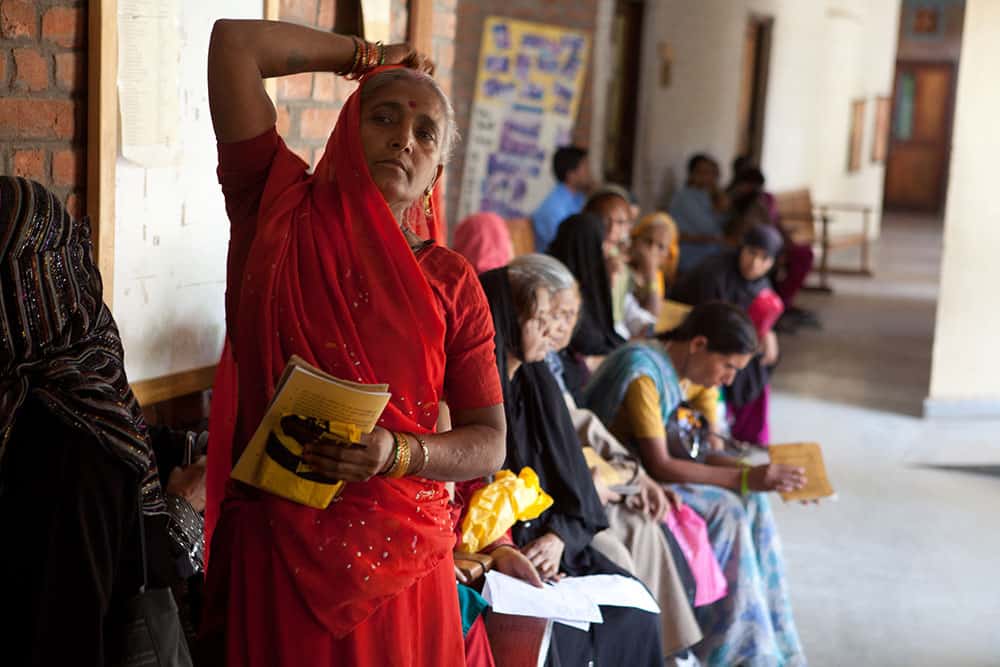
Originally opened in 1996 using donations from our first newspaper appeal, the Sambhavna Trust Clinic is dedicated to providing free, ethical and sustainable healthcare to survivors of the Bhopal gas disaster and ongoing water poisoning.
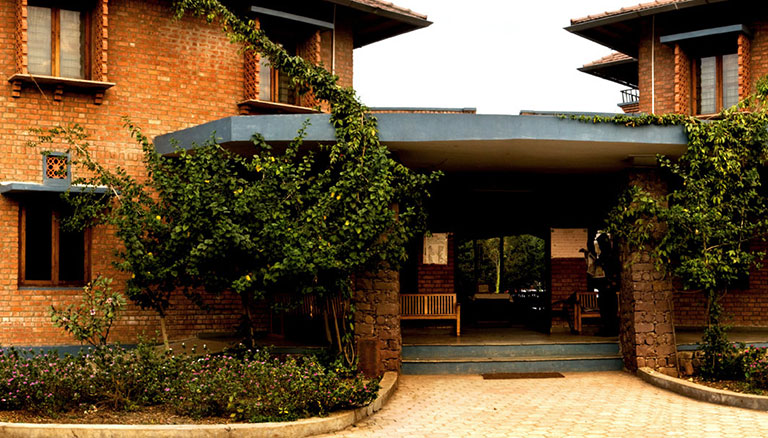
Sambhavna Clinic
Originally opened in 1996 using donations from our first newspaper appeal, the Sambhavna Trust Clinic is dedicated to providing free, ethical and sustainable healthcare to survivors of the Bhopal gas disaster and ongoing water poisoning.
Curing Through Compassion
In the years after the gas disaster, Bhopal survivors, realising they would receive proper care neither from Union Carbide, the company that had injured them and killed their loved ones, nor from the government that had failed to protect them, resolved to set up their own free clinic.
Our first appeal in the Guardian was risked on the wavering hope that this was not a world without care. People from all over the UK and beyond responded in such numbers that it amounted to a wave of love, one that rolled 6,000 miles to the survivors in Bhopal.
The name of the new clinic was chosen to reflect this generosity. 'Sambhavna' is a Sanskrit word that means ‘possibility’. Read as sama and bhavna it means: ‘shared feelings’ or ‘compassion’.
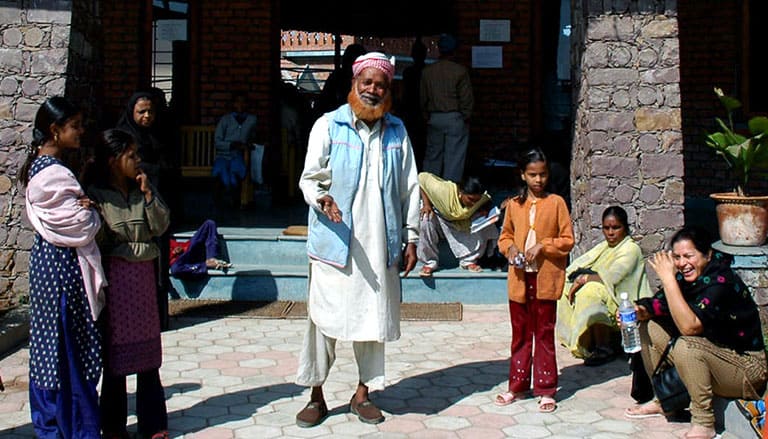
Staff and patients outside the Sambhavna clinic building, less than half a kilometre from the Union Carbide factory site
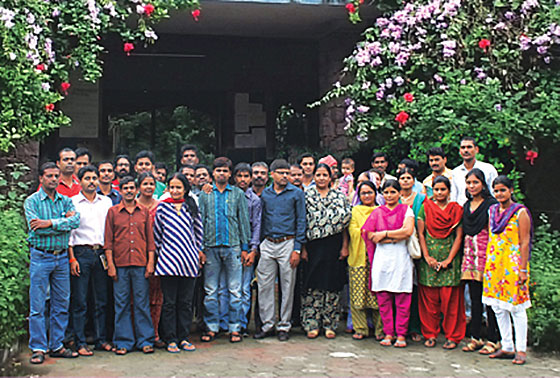
The Sambhavna clinic staff
A Model for Ethical and Sustainable Healthcare
The Sambhavna Trust Clinic opened its doors on September 2nd, 1996. The Clinic started provision of free medical care, as well as research, documentation and other health related work in support of the survivors. More than 37,000 survivors have so far been registered for long term medical care at the Sambhavna Clinic. The Clinic is built in an area of two acres just 400 meters away from the Union Carbide factory amidst a dense population of gas and contaminated groundwater victims. Well over 30 thousand survivors and others are supported by the Clinic through Community Health Work. Developed to be a model for the ethical and sustainable treatment of victims of chemical disasters, the Sambhavna Clinic is unique in many ways, and has pioneered new forms of treatment.

A short film documenting the work at the Sambhavna clinic, narrated by Sambhavna Co-Founder Sathyu Sarangi
Healthcare Without Harm
Chronically impacted by gas from the 1984 Union Carbide leak, and after years of drinking water contaminated by organophosphates and heavy metals, the bodies of many Bhopal survivors are in toxic overload. Multi-systemic damage or multiple health conditions can leave their immune systems so compromised that many antibiotics, and even simple drugs like aspirin, can have unpredictable and adverse effects. To avoid further loading the bodies of survivors, we chose as our guiding principle ‘first do no harm’.
Sambhavna decided to combine the best modern medicine with drug-free herbal medicines and therapies derived from the traditional Indian science of medicine, Ayurveda. Unlike Ayurvedic medicines generally available in the market, Sambhavna's medicines are created on site and do not contain heavy metals like lead. The clinic also offers pancharkarma (steam cleansing) and yoga therapy.
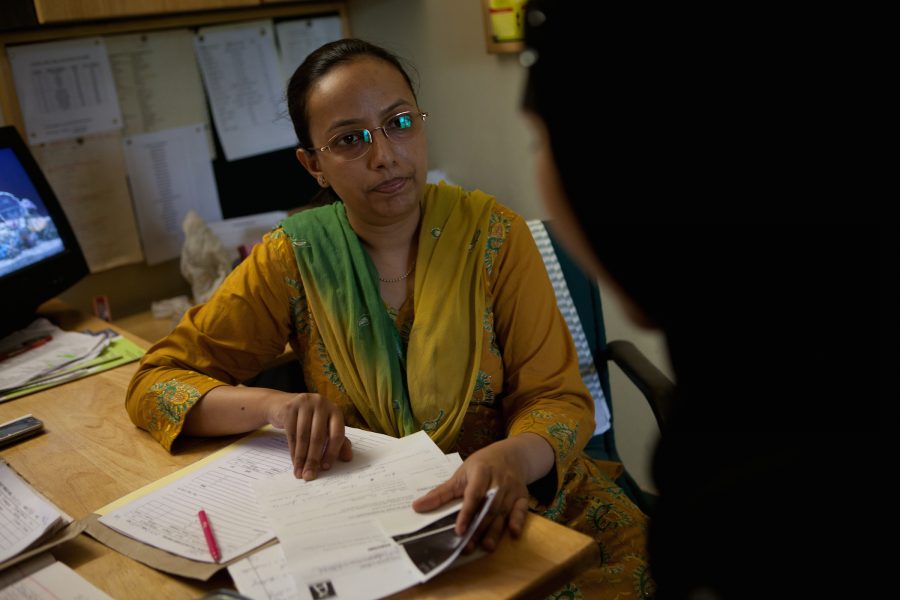
Staff at Sambhavna take full medical histories and perform tests to determine the state of patient's health before prescribing treatments
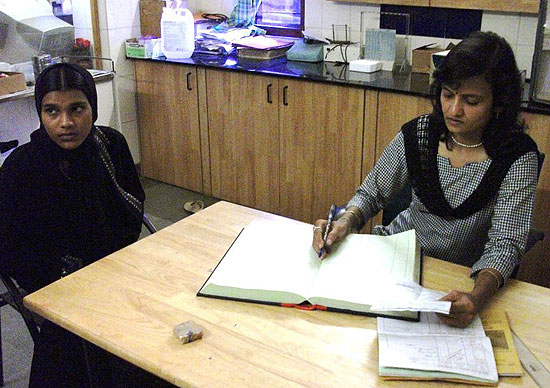
A doctor writes out a prescription for a patient and logs it in their record, which is then entered onto the digital database
Modern Medicine, Ayurveda and Yoga
Modern medicine at Sambhavna is used primarily for those who have suffered major health conditions as a result of toxic exposure. Most common are thyroid problems, gynaecological disorders, respiratory conditions, and cancers. Those requiring surgery or specialised cancer treatments are referred to local hospitals.
Natural Ayurvedic treatments are prescribed for more common ailments and to relieve symptoms such as constipation, inflammation, and lack of appetite. For those suffering from multi-systemic injuries or multiple health problems, Panchakarma therapy is used to de-toxify the body alongside other required treatments.
Yoga therapy is offered for chronic physical pains and conditions, primarily back pain. Patients are given a treatment plan to follow at home. All they require is a little space and mat or cushion.
Sambhavna's Medicinal Herb Garden
The Sambhavna Clinic stands in about one acre of beautiful medicinal herb garden in the heart of the gas-affected area of Bhopal. About a hundred kinds of herbs are grown organically in the garden of the Clinic and 85 types of Ayurvedic medicines are prepared from them in the Clinic itself.
The garden is carefully maintained by the clinics gardeners, who use a special technique called 'vanaj' to harvest natural microbes from nearby forests and use them to treat the plants. The diluted liquid also creates a natural cleaning agent, meaning no chemical agents or fertiliser are required inside or outside the clinic building.
The garden is open to visitors and is a safe haven for those attending the clinic for mental health treatments. Panic attacks, insomnia, anxiety, and depression are all common symptoms among survivors, and the garden provides a place of calm for them to wait.
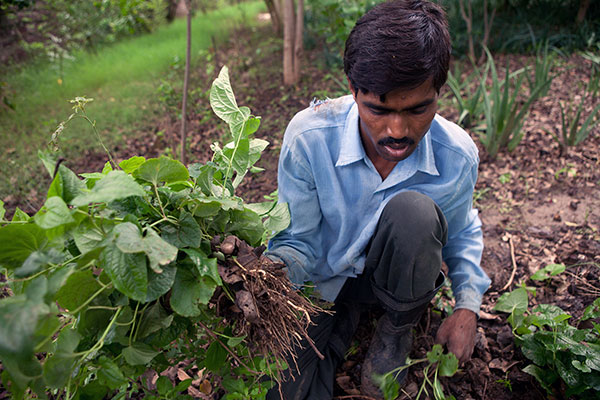
A gardener at the clinic carefully harvests plants for use in the creation of natural herbal remedies
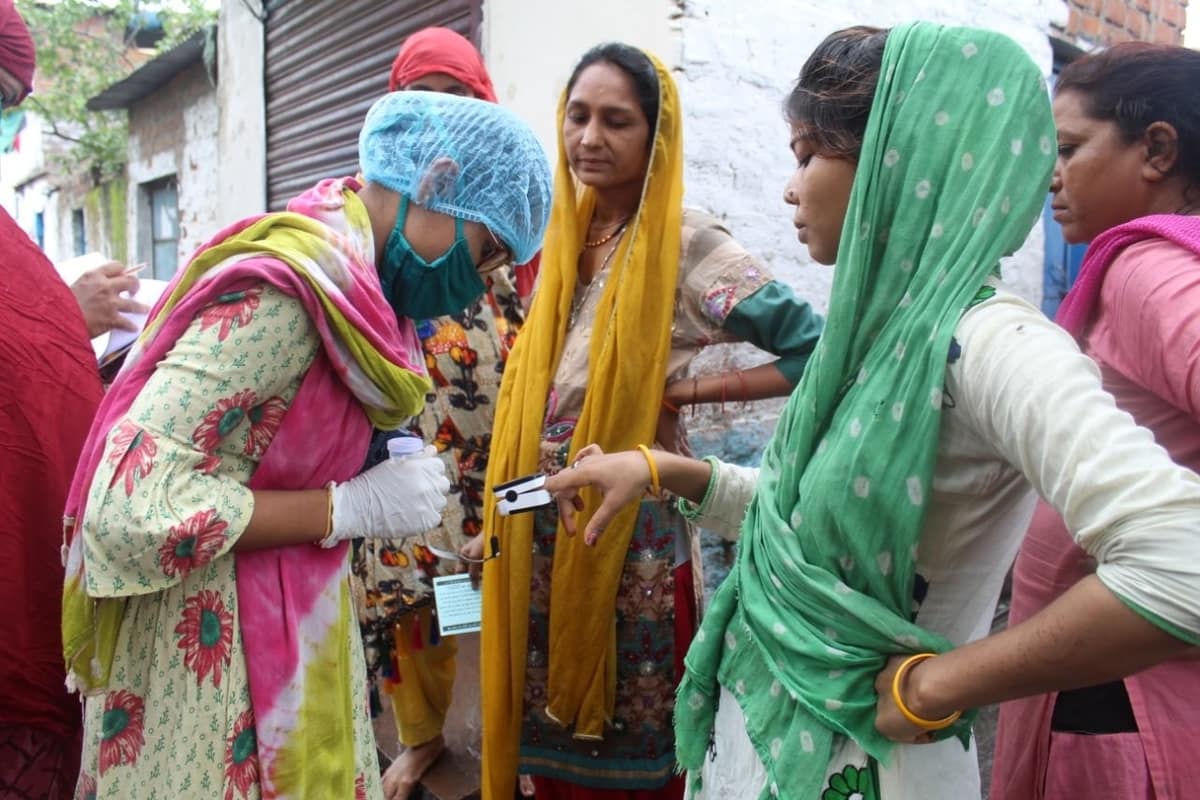
A Sambhavna community health worker screens a member of the public with a pulse oximeter during the Covid-19 pandemic
A Community of Care
We believe the prevention and control of diseases has as much role in improving the health status of survivors as appropriate healthcare. This work is carried out by Sambhavna's Community Health Team. Community health workers find, identify, inspire, train and support health volunteers in making their communities self-reliant in matters of community health. The clinic provides community volunteers with medical equipment and trains them in their use.
Over the years, more than 100 health volunteers have reduced the rate of pulmonary TB by 10 times in a population of more than 30,000 survivors, eliminated dengue and malaria from the area, and have received praise from international experts for their effective work during the Covid-19 Pandemic. They are also taught how to chemically test groundwater so that they can themselves monitor the spread of groundwater contamination.
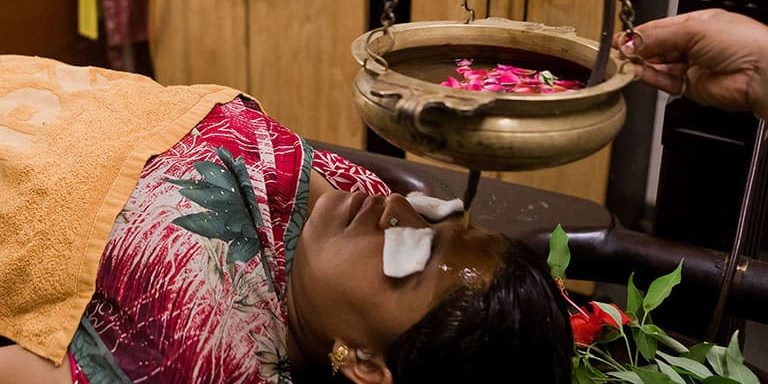
Ayurvedic Medicine
Significant features of Ayurvedic healthcare at Sambhavna include the use of medicines described in standard texts, often produced on site, rather than factory-manufactured drugs.
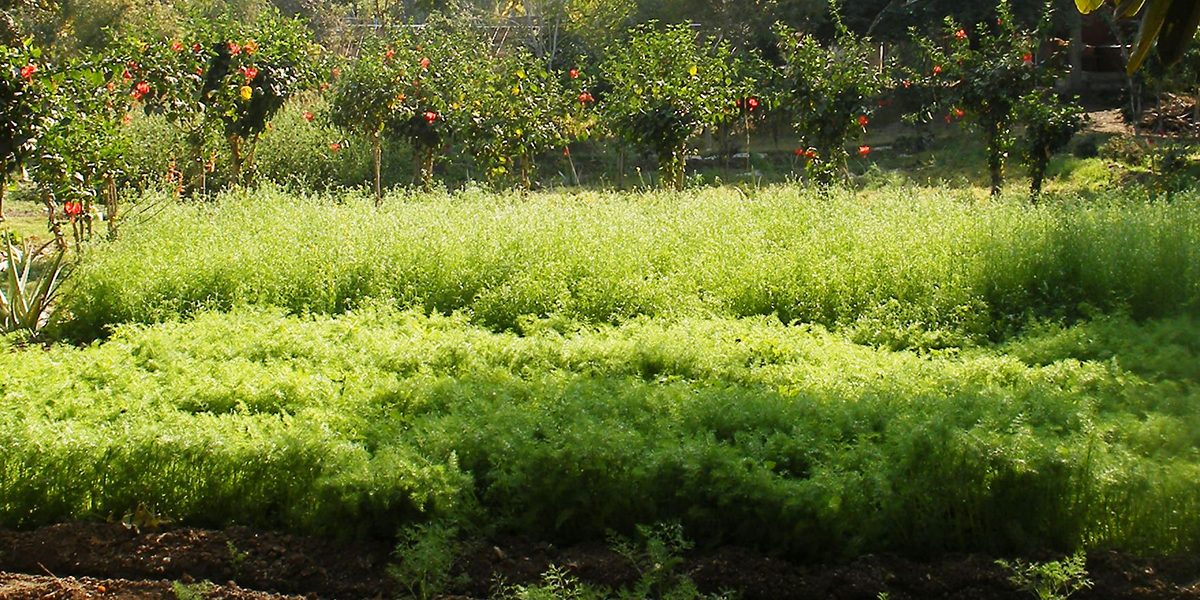
Medicinal Herbal Garden
Sambhavna Trust chose to break the cycle of poison by growing ancient plant remedies to treat the modern industrial diseases engulfing Bhopal.
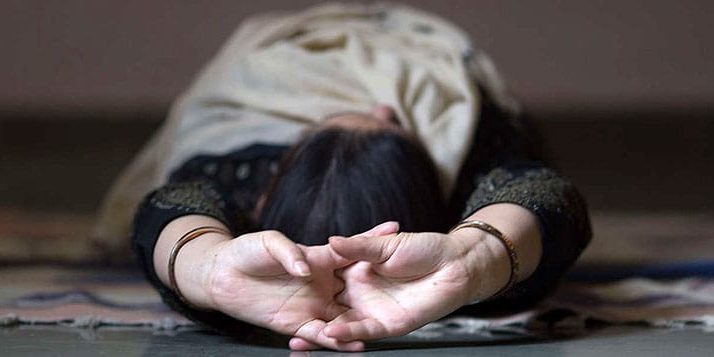
Yoga Therapy
At Sambhavna yoga has been found to be particularly beneficial for people suffering from chronic diseases involving the respiratory, musculo-skeletal, neurological and endocrine systems.
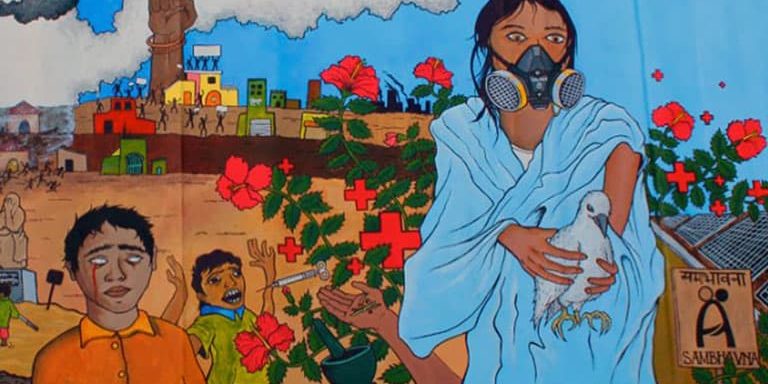
Community Healthwork
Sambhavna believes in empowering the community and the individual to take control of its and their health. The eight community healthworkers at Sambhavna are the only ones of their kind in all Bhopal.
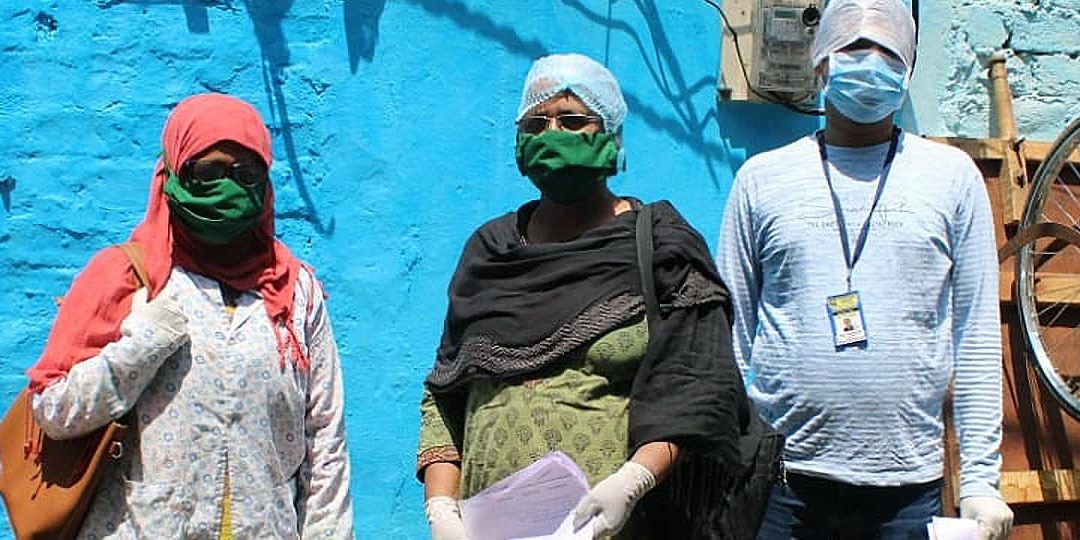
Bhopal's Covid-19 Response
Lacking the natural defences to fight the coronavirus Bhopal survivors know that personal safety depends on collective action. Their far-sightedness gifts to the world a model approach against Covid-19.
Please Donate
There are still over 100,000 people suffering from chronic illness as a direct result of the 1984 disaster and a third generation is now blighted by the ongoing water contamination. The clinics are the only places where both groups of people can get free, first-class healthcare.