May 13 2013 by Jade in Brighton

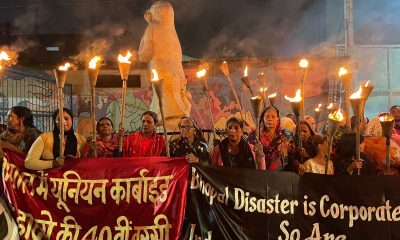
Caitlyn Schuchhardt and other campaigners in solidarity with the ICJB protest outside the Dow AGM in Michigan.
Last week, protesters gathered outside Dow Chemical’s Annual General Meeting (AGM) at the Dow headquarters in Michigan to urge Dow to take responsibility for the ongoing tragedy in Bhopal, India.
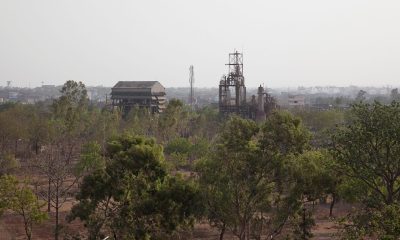
In December 1984, 27 tonnes of deadly gasses leaked from a Union Carbide pesticide factory in Bhopal killing 8-10,000 people instantly. An additional 1000,000 people have died as a result since. The abandoned factory has not been cleaned up and continues to leak toxic chemicals into the water supplies of many of the city’s poorest residents.
Union Carbide has been a wholly owned subsidiary of Dow Chemical since they took over the company in 2001. Since the take over, protesters around the world have challenged Dow Chemical over the outstanding liabilities within the Indian Courts and for allowing Union Carbide chairman Warren Anderson to continue to abscond from justice.
Concordia College graduate and International Campaign for Justice in Bhopal (ICJB) advisory board member Caitlyn Schuchhardt who organised the AGM protest told us; “people don’t realize it is still going on today. There is lots of ongoing water contamination. There are medical issues of children still being born with defects.”
Although the Bhopal disaster happened almost 30 years ago, the protest must still go on, Schuchhardt said. “This issue is not going to go away. People really do care about this and want to see them do the responsible thing,” she said.
In light of the Olympic sponsorship deal between Dow Chemical and the International Olympic Committee (IOC), Dow Chemical’s moral reputation has been widely regarded as controversial at best.
Last year’s 2012 Olympic Games in London prompted significant protests over the corporate sponsorship of the event and Schuchhardt doesn’t see the Bhopal protests going away.
“The backlash from last year’s Olympics was awful, absolutely awful for Dow,” she said. “I feel like if they want to do something about that, that they could really use the Olympics as a way to kind of turn this around and address the Bhopal disaster. They could turn this around and make it look good for themselves if they want to, but that does involve admitting responsibility and stepping up and doing what’s right and what’s ethical. We would love to see them do that.”
You can visit the International Campaign for Justice in Bhopal (ICJB)’s website here
Tags: 1984 Union Carbide gas tragedy, 2012 London Olympics, Abandoned Union Carbide factory, bhopal, Bhopal contamination, Bhopal Gas Disaster, Bhopal India, Caitlyn Schuchhardt, Caitlyn Schuchhardt Concordia College, Caitlyn Schuchhardt International Campaign for Justice in Bhopal advisory board, Dow AGM protest, Dow Bhopal, Dow Cehmical, Dow Chemical Annual General Meeting, Dow Chemical Olympics, Dow headquarters Michigan, International Campaign for Justice in Bhopal ICJB, International Olympic Committee (IOC), Olympic protests Bhopal, olympic sponsorship, Olympic sponsorship deal, union carbide, Union Carbide Bhopal, Union Carbide pesticide factory Bhopal, Warren Anderson, Warren Anderson Bhopal, Warren Anderson Union Carbide
Posted in ICJB, News | No Comments »
Apr 9 2013 by Jade in Brighton

Satinath Sarangi protesting outside the offices of Dow Chemical, the owners of Union Carbide, in Mumbai, India. Photo: AFP/ Getty Images
Today in Mumbai more than 200 survivors of the Bhopal gas disaster occupied the offices of Dow Chemical Corporation in Vikhroli, Mumbai. Union Carbide has been a wholly owned subsidiary of Dow Chemical since 2001. The protestors were chanting “No Justice in Bhopal – No Business in India” and demanding that the company recognise the criminal, civilian and environmental liability of Union Carbide.
Security and police officers attempted to lock the gates as the survivors arrived but 150 survivors managed to enter the Dow premises. At first, the police told the protestors that there were no Dow Chemical offices in the area but the survivors persisted and found out there were at least two Dow offices close by. The demonstrators submitted a charter of demands to the representatives of Dow.

Lakhmi Bai came from Bhopal to demand Dow take responsibility for Bhopal. Photo by Kamayani Bali Mahabal.
Union Carbide were responsible for a lethal chemical leak at its plant in Bhopal in 1984 which has led to the deaths of over a hundred thousand people in the past 28 years. The factory lies abandoned and the site remains contaminated to this day. Dow Chemical denies any responsibility for the disaster and refuse to provide remediation to the site.
The survivors were protesting against Dow Chemical who continue to trade in dangerous chemicals while the legacy of Union Carbide continues in Bhopal. “From the year 2000, we have been making it clear to Dow Chemicals that if they decide to buy Union Carbide, they will have to take all the liabilities too,” said Satinath Sarangi who led the demonstrations. “Cleaning toxic material is one of them and they are simply ignoring that.”
Tags: 1984 Union Carbide gas tragedy, bhopal, Bhopal Gas Disaster, Bhopal gas tragedy, Bhopal Survivors, Dow, DOW Chemical, Dow Mumbai, Dow Mumbai protest, Indian police, Indian protest, International Campaign for Justice in Bhopal ICJB, Justice for Bhopal, Sathyu Sarangi, union carbide, Vikhroli Mumbai
Posted in Media Coverage, News | No Comments »
Apr 8 2013 by Jade in Brighton

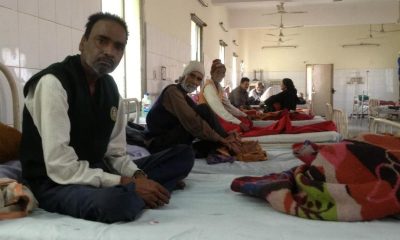
Patients wait to be seen at the Sambhavna Clinic in Bhopal. Photo by David Graham
Press Statement, April 7th 2013
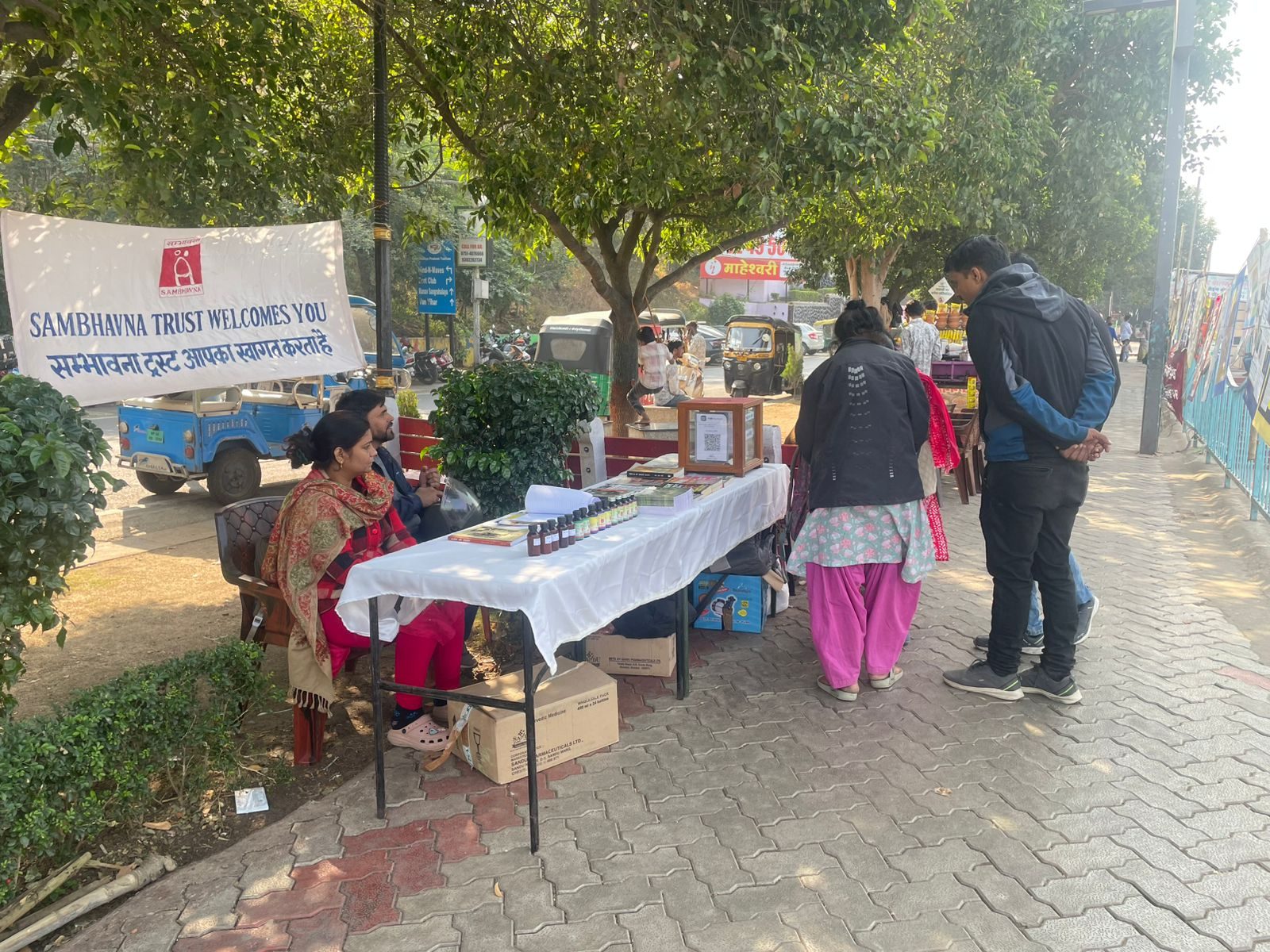
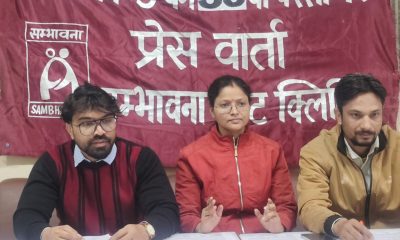
At a press conference organized on the occasion of the World Health Day, staff at the Sambhavna Trust Clinic in Bhopal presented the findings of a recent study that show that the survivors of the December 1984 Union Carbide disaster are more prone to develop high blood pressure than unexposed people from the same socio-economic background.
The study was carried out by the community health workers at the clinic using a sample of 195 persons above 30 years of age from the Rajgarh Colony near the Union Carbide factory and a similar number from 100 Quarters near BHEL Jamboree Grounds. The study showed that 28 % of survivors of the disaster were hypertensive whereas in the unexposed population the figure was 23 %.
Curiously the study showed that 31 % of women had hypertension in comparison to 23 % of men in the gas exposed population. According to World Health Organisation’s ‘global health statistics 2012’ in India, 23.10% of men and 22.60 % of women over 25 years of age suffer from hypertension. In the unexposed population more men are hypertensive than women.
The study pointed to an alarming fact that 82 % of people in both exposed and unexposed communities were not aware that they were hypertensive. This is particularly worrisome because untreated hypertension can lead to heart attacks, strokes, and kidney failure. Another health risk identified by the study was the prevalence of obesity particularly among female gas victims. 44 % of the women in the gas exposed population were overweight or obese and 68 % of such women were hypertensive.
Dr Mohammad Ali Qaisar, one of the physicians working at the Sambhavna Clinic said that many scientific studies have shown that exposure to pesticide and other toxic chemicals causes hardening and narrowing of blood vessels, called atherosclerosis, that results in high blood pressure in the exposed individuals.
Dr Qaisar pointed out that a large proportion of the Bhopal disaster survivors registered at the Sambhavna Trust Clinic have been diagnosed with hypertension, and in fact, it is the second most common diagnosis. Among the 7681 gas affected persons over 30 years of age registered at the clinic, 3508 (46 %) have been diagnosed with hypertension. More gas affected women (54%) than men (33%) were found to suffer from hypertension. It is interesting to see that women in the age group 41 to 50 years of age were most diagnosed with hypertension compared to men who were most hypertensive in the age group 51 to 60.
Dr. Qaisar has called upon the Department of Bhopal Gas Tragedy Relief and Rehabilitation to pay special attention to surveillance, treatment, follow up and health education focused on hypertension in the gas affected population.
Tags: 1984 Union Carbide gas tragedy, BHEL Jamboree Grounds Bhopal, bhopal, Bhopal Gas Disaster, Bhopal gas disaster health problems, Bhopal gas mortality, Bhopal health affects, bhopal medical appeal, Bhopal mortality, Department of Bhopal Gas Tragedy Relief and Rehabilitation, Dr Mohammad Ali Qaisar Bhopal, Dr Mohammad Ali Qaisar Sambhavna, Gas exposed communities Bhopal, Hypertension Bhopal, Rajgarh Colony Bhopal, Sambhavna Bhopal, Sambhavna Clinic, Sambhavna Trust, Sambhavna Trust Clinic Bhopal, Union Carbide factory, World Health Day, World Health Day 2013, World Health Organisation WHO
Posted in News | No Comments »
Mar 27 2013 by Jade in Brighton

A protest outside the BMHRC by survivors back in 2010
The Bhopal Memorial Hospital & Research Center (BMHRC) has been ordered by the Central Information Commission (CIC) to reveal details of controversial clinical trials carried out at the hospital including that of patients who died during the drug trials.
In 2011, it was widely reported that many survivors of the gas disaster were unwittingly used as guinea pigs in clinical trials carried out at the BMHRC and funded by Western pharmaceutical companies. Now the CIC has ordered the hospital to reveal details of people on whom the trials were conducted, the funds the hospital received to carry out the trials from different drug companies, the number of patients that died, the drug companies involved, as well as to disclose the records of review of the trials.
Rachna Dhingra, an activist who has been working with the survivors groups to file the petition against the BMHRC, stated that the “BMHRC was built to provide free medical care to the gas victims but they started testing [patients] as guinea pigs at the behest of multinational pharmaceutical corporations.”
The hospital had previously expressed objections to disclosure of such information which were overruled by the CIC, in order to safeguard “larger public interest.” The BMHRC was further criticized by the CIC for not following previously issued right-to-information orders to collect testimonies from the survivors of the gas disaster. The CIC had instructed the BMHRC to “issue notice to any 25 patients at random on whom drugs were tried” to obtain “their consent for disclosure of their names” as per law.
The petition accused that as many as 15 trials and 13 deaths in 3 trials have taken place and no action initiated against the BMHRC doctors, management or pharmaceutical companies. “We have proof that 15 trials were conducted and the money for the other trials are not accounted for,” Ms. Dhingra’s commented.
A representative of the CIC said “Given the fact that a number of drugs manufactured by foreign/Indian companies were tried on these poor, helpless victims of the gas tragedy, I am of the opinion it would be in the larger public interest to disclose the requested information.”
Tags: bhopal, Bhopal court cases, Bhopal Gas Disaster, Bhopal gas hospital, Bhopal guinea pics, bhopal medical appeal, Bhopal Memorial Hospital & Research Center, Bhopal Survivors, BMHRC, BMHRC Bhopal, BMHRC clinical trials, gas survivors used as guinea pics in clinical trials, Information to be disclosed on illegal drug trials undertaken on Bhopal gas survivors, Madhre Pradesh government, Rachna Dhingra, The Central Information Commission (CIC), Western pharmaceutical companies
Posted in Medical, News | No Comments »
Mar 26 2013 by Jade in Brighton
Press Conference: Bhopal Survivors to garner support from political parties on lingering issues of compensation, punishment of guilty corporations and medical and social rehabilitation.
At a press conference last week five organizations working among the survivors of the December 1984 Union Carbide gas disaster in Bhopal announced their plans to garner support of political parties towards resolving the lingering issues of compensation, punishment of guilty corporations and medical and social rehabilitation.
The organisations represented were the Bhopal Gas Peedit Mahila Stationery Karmchari Sangh, the Bhopal Gas Peedit Mahila Purush Sangharsh Morcha, the Bhopal Gas Peedit Nirashrit Pension Bhogi Sangharsh Morcha, the Bhopal Group for Information and Action and Children Against Dow Carbide.
The organizations presented copies of letters sent to a dozen political parties asking their stand with respect to eight demands on additional compensation for the gas disaster, correction of figures of injury and death caused by the disaster, clean up of contaminated soil and ground water, compensation for injuries and birth defects caused by toxic contamination, setting up empowered commission for rehabilitation and stopping Dow Chemical from doing business in India till it presents Union Carbide in the ongoing criminal case on the disaster.
The organizations said that they have asked the political parties to describe the steps they would take to make the governments at the state and the centre agree to the demands of the victims of Union Carbide in Bhopal in case a party supports the demands of the survivors organizations.
The Bhopal survivors’ organizations said that they will decide on their strategy regarding the coming elections in the state on the basis of the response they get from political parties who have been given a month to reply. They said that if none of the parties support the demands of the gas victims or do not send their replies within a month, the organizations would be encouraging voters in the gas-affected areas to exercise their right to “null voting”.
The organizations said that currently they are educating voters in the areas affected by the December 1984 disaster to ask candidates of political parties who are visiting them in preparation of the elections about their and their party’s contributions towards justice and welfare of Union Carbide’s victims.
The organizations appealed to the survivors of the Bhopal disaster to make judicious and strategic use of their power to elect candidates so that the lingering issues of the disaster are resolved in their favour.
Tags: Balkrishna Namdeo, bhopal, Bhopal compensation, Bhopal corporate crime, Bhopal Gas Disaster, Bhopal Gas Peedit Mahila Purush Sangharsh Morcha, Bhopal Gas Peedit Mahila Stationery Karmchari Sangh, Bhopal Gas Peedit Nirashrit Pension Bhogi Sangharsh Morcha, Bhopal gas tragedy, Bhopal Group for Information and Action, Bhopal India, bhopal medical appeal, Bhopal Survivors, Bhopal survivors demands, DOW Chemical, medical care Bhopal, Nawab Khan, Rachna Dhingra, Rashida Bi, Safreen Khan Children Against Dow Carbide, Sambhavna Trust Clinic Bhopal, Satinath Sarangi, social rehabilitation Bhopal, union carbide
Posted in Media Coverage, News | No Comments »
Mar 4 2013 by Jade in Brighton

Photo by Alex Masi
At a press conference in Calcutta on Sunday 3rd March 2013, doctors from Bhopal confirmed that congenital birth defects in affected areas of the city are seven times higher than usual rates.
Third generations are increasingly born with psychological and physical deformities as a result of widespread water contamination following the world’s worst industrial disaster in 1984.
Over 28 years ago, on the 3rd December 1984, 27 tonnes of deadly gas leaked from a Union Carbide pesticide plant which was built in a heavily populated area of the city. To this day the abandoned factory stands leaking chemicals into the environment nearly 30 years on. The water contamination was widespread around the factory several years prior to the disaster due to the indiscriminate dumping of toxic waste from the plant since it started manufacturing pesticides in 1969.
Surveys have shown that in affected areas of Bhopal 3,000 children out of 20,000 families are suffering from multiple and serious congenital deformities. Doctors who have worked in affected areas of the city for over 20 years recognize that the abnormalities presented are new and unique in nature from those that have been seen before.
The humanitarian catastrophe in Bhopal has been widely cited as an ongoing disaster. The high levels of chemicals responsible for the congenital anomalies are evident in both the water and the air in the affected areas of the city. Over 120,000 people are still suffering from debilitating illnesses in Bhopal today.
You can make a donation to the Bhopal Medical Appeal here
Tags: 1984 Union Carbide gas tradgey, abandoned factory Bhopal, Alex Masi, bhopal, Bhopal birth defects, Bhopal congenital deformities, Bhopal doctors, Bhopal Gas Disaster, Bhopal health, Bhopal health problems, bhopal medical appeal, Bhopal research, Bhopal Second Disaster, Bhopal Survivors, Bhopal Water Contamination, Chingari Trust Bhopal, Chingari Trust Rehabilitation Centre, Dow, india, Sambhavna Clinic Bhopal, Sambhvana Trust Bhopal, union carbide, world’s worst industrial disaster 1984
Posted in Medical, News | No Comments »
Feb 26 2013 by Jade in Brighton
Talkrupy with Annie Lindstrom welcomed Colin Toogood, Campaigns Manager for the Bhopal Medical Appeal, to the show on Thursday, February 21st at 11am Eastern Time.
It’s been 28 years since the people of Bhopal, India awoke in a cloud of gas 500 times more toxic than cyanide. Thousands of people died. Sadly, the poisoning continues to this day. Fortunately, the people have a strong advocate in the Bhopal Medical Appeal.
Many are unaware that the disaster in Bhopal continues to this day. An estimated 120,000–150,000 survivors are chronically ill. The Bhopal Medical Appeal raises awareness of the situation and funds for the Chingari Rehabilitation Centre and the Sambhavna Clinic, which has treated more than 35,000 people since 1996.
Colin will talk about the unique work and ethos of the clinics as well as ongoing efforts to get the contaminated grounds and water cleaned up so the people can finally recover from the disaster.
You can listen to the interview online here
Tags: 1984 Union Carbide gas leak, Annie Lindstrom, bhopal, Bhopal Gas Disaster, bhopal medical appeal, Blog Talk Radio, Colin Toogood, india, Sambhavna Clinic, Talkrupy Radio, the Chingari Rehabilitation Centre
Posted in Media Coverage, News | No Comments »